Home
Food education, school gardens and neighborhood food access, explained
At a glance
- Nutrition education reaches community settings
- Farm to school connects food and learning
- Urban agriculture includes growing and distribution
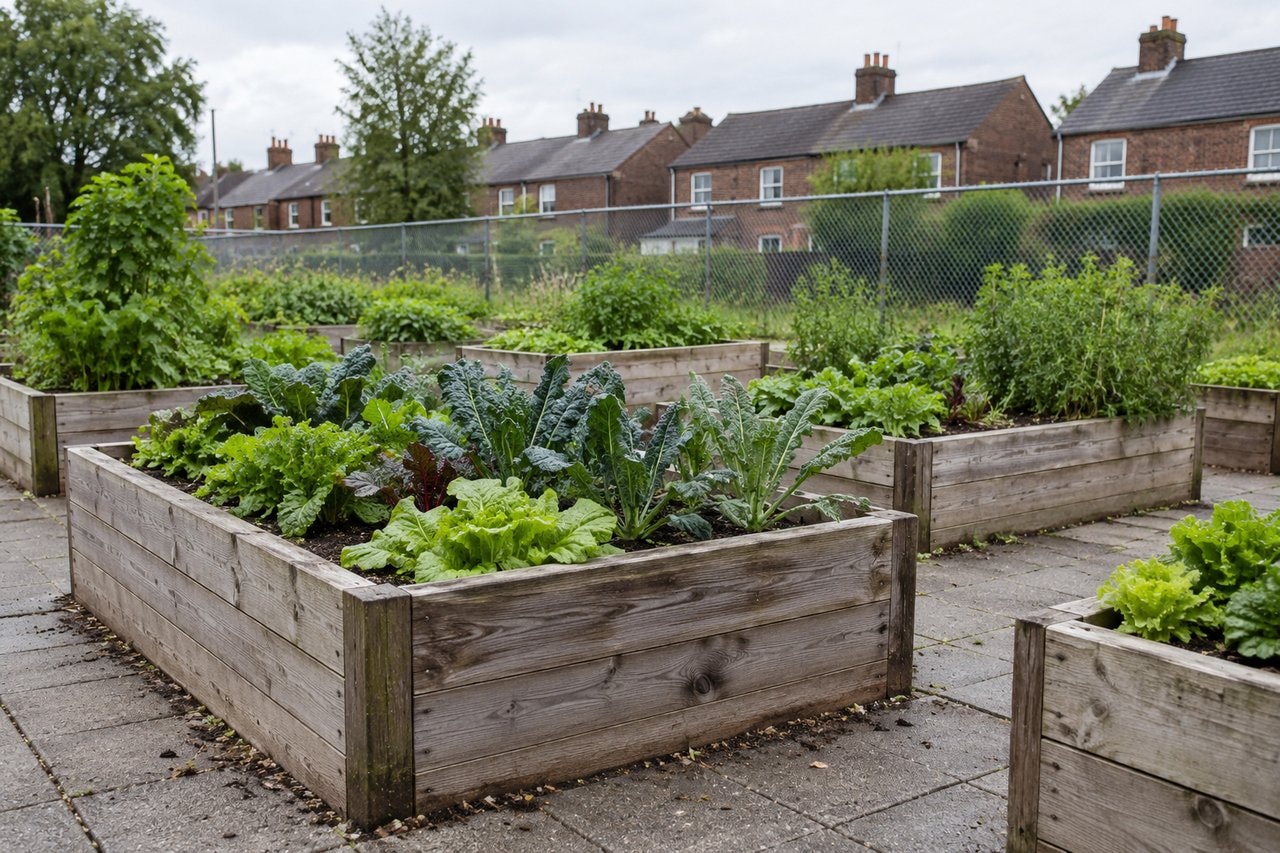
The Schoolyard Table is a reference for adults who want to understand the connections between food, schools and city neighborhoods. It covers the classroom and cafeteria, the garden bed and market stall, and the public programs that sit behind them. The pages explain terms, describe program models and separate what an activity sets out to do from what a study has measured. Parents, teachers and school staff, community gardeners, university students and volunteers, and program organizers can read by subject rather than by professional background.
Food in schools
School food is a subject with several connected parts. A lunch program has a different purpose from a classroom lesson; a garden has a different role from a snack sold during the school day. The page on nutrition education follows the teaching side, while the school-meals pages explain the meal programs and the policy framework around them. Gardens, produce stands and cooking classes have their own pages because each raises different questions about learning, organization and safety.
USDA's Food and Nutrition Administration describes farm to school as making local food and agricultural education available through grants, research, technical assistance and training. That description connects a food supply with a learning setting. It also helps explain why a reference on school food includes both growing and buying food, alongside lessons about its origins. An activity can be read through these different purposes without assuming that every school uses the same model.
Neighborhood food
The neighborhood section moves beyond the school gate. It covers farmers' markets, community supported agriculture, produce bags, urban farms and nutrition programs for adults and older adults. These pages explain the arrangement behind each model: where food comes from, how it reaches a household, and which agency programs are relevant. The food-access page explains food security and related terms, including how different references frame the relationship between access, resources and local food systems.
Wikipedia's article on urban agriculture defines the subject through cultivating, processing and distributing food in urban areas. Food production is therefore part of the neighborhood discussion, alongside how food moves and becomes available. A garden, a farm, a market and a produce share describe different arrangements within that discussion. The pages keep those differences visible rather than using a broad label to suggest that all of them supply the same service.
Programs and people
The field guide to program models is a starting point for readers interested in organization. It puts school gardens, markets, classes, youth jobs and university partnerships alongside each other, with links to their fuller explanations. Separate pages cover youth leadership, nutrition education paid for through SNAP, service-learning and college volunteers. The emphasis is on the role or model being discussed. These are descriptions of subjects, with no enrollment, recruitment or participation channel.
Wikipedia describes nutrition education as learning experiences delivered in different venues, with activities at individual, community and policy levels. A classroom is consequently part of a wider educational picture. The reference follows those settings while keeping the intended adult reader in view. It describes work involving young people for the adults who plan, supervise, study or support it.
The body, activity and the reference shelf
The community-fitness page explains the body science behind activity: muscle, tendons, cartilage and joints, along with national guidance and research reported as the sources present it. History and law pages explain how school food developed and how child-nutrition legislation relates to agency rules. The reading list, questions and glossary make it possible to follow an unfamiliar term or find the agency responsible for a particular subject.
Sources are named within the prose so that a definition, program description or research finding can be read beside its reference. Figures belong to the cited source and its stated period. Research is described with its design and limits. The pages take no side in policy debates and give no medical, dietary or legal advice. They provide a route through the subjects and the evidence, leaving personal decisions and program-specific questions outside the reference's role.
Browse the reference
In schools
Nutrition education
Teaching frameworks and evidence about classroom learning.
School meals
Lunch, breakfast, snacks and local wellness policies.
School gardens
Growing spaces, soil safety and garden research.
Produce stands
School food sales, social purpose and safe handling.
Cooking classes
Hands-on learning, research and kitchen safety.
Neighborhood food
Farmers' markets
Direct sales, food benefits and market incentives.
CSA and produce bags
Harvest shares, shared risk and produce distribution.
Food access
Food security, geographic access and related concepts.
Urban farms
City growing, shared plots and soil assessment.
Adults and older adults
Meals, food packages, market benefits and education.
Programs & people
Program field guide
The arrangements behind classes, gardens and food programs.
Program aims
Education, access, activity and local food systems.
Youth jobs and leadership
Young people's strengths, learning and workplace rights.
SNAP-Ed
Food education and its federal program connection.
Service-learning
Coursework, community work and institutional partnerships.
College volunteer handbook
Volunteer roles, youth participation and food safety.
Body & activity
Community fitness
Muscle, tendons, joints and evidence about activity.
Reference
School food history
Food education, public programs and their development.
Child-nutrition law
Laws, committee hearings and agency rules.
Further reading
Annotated sources grouped by subject.
Questions and answers
Common questions linked to fuller explanations.
Glossary
Terms used across food, learning and body science.
About this reference
The reference, its sources and its role.